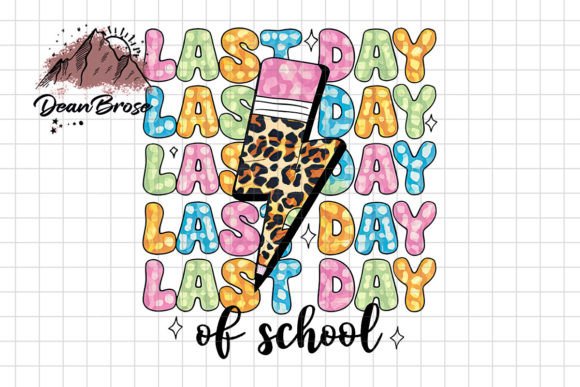
Reviewing Last Day of School Png Sublimation for Embroidery
As an embroidery designer who spends more time staring at digitized stitches than I do sleeping, I have learned that not every digital asset is created equal. We often find ourselves browsing through vast libraries of design assets, looking for that perfect graphic to elevate a handmade product. Recently, I came across the Last Day of School Png Sublimation file. At first glance, it sits squarely in the Crafts and Graphics categories, marketed primarily for sublimation. However, my job is to look past the primary label and determine if a file can pull double duty in a professional embroidery project.
The initial impression of this design is nostalgic and celebratory. It captures that specific mix of relief and excitement that defines the end of an academic year. The visual personality is clean, with bold lines that suggest it was originally intended for high-contrast printing. For us in the stitching world, bold lines are a double-edged sword. They offer clarity, but they also demand precision. When I visualize this design on a tote bag design or a sweatshirt embroidery piece, I see potential, but I also see several technical hurdles that need to be addressed before the needle hits the fabric.
Translating Pixel to Stitch: A Real-World Scenario
Let’s walk through a realistic scenario. Imagine a client approaches your small shop requesting a set of personalized gifts for their child’s teacher. They want something durable, washable, and professional. You consider using the Last Day of School Png Sublimation as the basis for a custom embroidered patch or directly stitched onto a canvas tote. This is where the distinction between a PNG and a true machine embroidery design becomes critical.
The product description states this is a transparent background PNG file at 300 dpi. It explicitly notes, "This is not SVG for cutting." This is a vital detail. As an embroiderer, you cannot simply import this PNG into your embroidery software and expect magic. You must manually digitize it. The 300 dpi resolution is excellent for reference. It allows you to zoom in and trace the outlines accurately, ensuring that your running stitch paths follow the intended curves and your fill stitch areas cover the necessary space without gaps.
If you were to stitch this onto a heavy cotton canvas for a tote, the bold nature of the design would hold up well. The thread colors would pop against the neutral background. However, if you attempted to use this on a stretchy jersey knit for a baby embroidery item, you would need to be cautious. Without proper stabilization, the dense areas of the design could pucker the fabric, ruining the finished product. This is why understanding the source file is just the first step in a successful craft business workflow.
Material Compatibility and Stitch Density
One of the most important aspects of evaluating any graphic for embroidery is assessing how it interacts with fabric texture. The Last Day of School Png Sublimation features elements that likely require varying stitch densities. If the design includes fine details or small text, these areas are prone to breaking or becoming illegible when stitched out, especially on textured fabrics like terry cloth towels or waffle-weave blankets.
For a holiday embroidery project or a seasonal gift, you might want to place this design on a cap. Curved surfaces are notoriously difficult for complex graphics. If you digitize this PNG for a hat, you must simplify the design. Reduce the stitch density in large fill areas to prevent the cap from stiffening excessively. Use underlay stitches strategically to anchor the design to the curved surface. If you ignore these steps, the final result will look amateurish, which hurts your reputation as an Etsy seller or boutique owner.
Furthermore, consider the color palette. Sublimation designs often rely on gradients and shadows. Embroidery, by contrast, relies on solid thread colors. You will need to make artistic decisions about how to translate the shading in the PNG into distinct thread changes. This process can enhance the design, giving it a tactile, premium feel that sublimation alone cannot achieve. A well-digitized version of this graphic could become a standout item in your small shop product lineup, offering a tactile alternative to printed goods.
Commercial Viability and Brand Consistency
For those running a commercial embroidery operation, consistency is key. Using a high-quality reference image like this PNG allows you to create a standardized look across multiple products. Whether you are making custom apparel for a school fundraiser or creating personalized gift items for parents, the design needs to be recognizable and clean.
However, there is a legal and practical caveat. Since this is sold as a graphic for sublimation, you must verify the license terms. Does the creator allow you to digitize this image and sell the resulting digital embroidery file? Or are you only allowed to sell the physical handmade product? Most commercial licenses for graphics do not automatically grant rights to redistribute the design as an embroidery file. Always check the specific licensing agreement before listing anything on your store. Protecting your brand consistency also means protecting your legal standing.
From a marketing perspective, this design fits well into the narrative of milestone celebrations. It appeals to emotions—pride, accomplishment, and transition. When you present this as part of a collection, perhaps paired with other academic-themed designs, it increases buyer engagement. Customers are not just buying a stitch pattern; they are buying a memory. Your ability to execute that memory cleanly on a pillow cover or a tea towel determines whether they become repeat customers.
Practical Designer Notes for Execution
Before you commit to stitching this design on a client’s garment, follow these practical steps to ensure quality:
- Test on Scrap Fabric: Always run a test stitch-out on the same type of fabric you intend to use for the final product. This reveals issues with tension and density.
- Check Thread Contrast: Ensure your chosen thread colors stand out against the fabric. A low-contrast combination will make the design look muddy.
- Review Stitch Density: If you are digitizing from the PNG, avoid overlapping stitches too much. High density leads to thread breaks and fabric distortion.
- Confirm Hoop Size: Make sure the design fits comfortably within your hoop, leaving enough margin for stability.
- Inspect Small Details: Tiny elements in the PNG may need to be enlarged or removed entirely if they are too small to stitch cleanly.
- Use Proper Stabilizer: Match your stabilizer to the fabric weight. Cut-away stabilizer is often best for garments that will be washed frequently.
- Verify Licensing: Confirm whether the license permits commercial use of the digitized version. Do not assume rights.
In conclusion, the Last Day of School Png Sublimation is a versatile graphic that can serve as an excellent foundation for embroidery projects, provided it is handled with technical care. It is not a plug-and-play solution, but rather a raw material that requires the skilled hand of a digitizer. For the experienced designer, this represents an opportunity to create something unique and tactile. For the beginner, it is a reminder that successful embroidery is about more than just hitting "start" on the machine. It is about understanding the interplay between image, thread, and fabric. By respecting these elements, you can transform a simple PNG into a cherished finished product that stands out in the crowded marketplace of handmade goods.